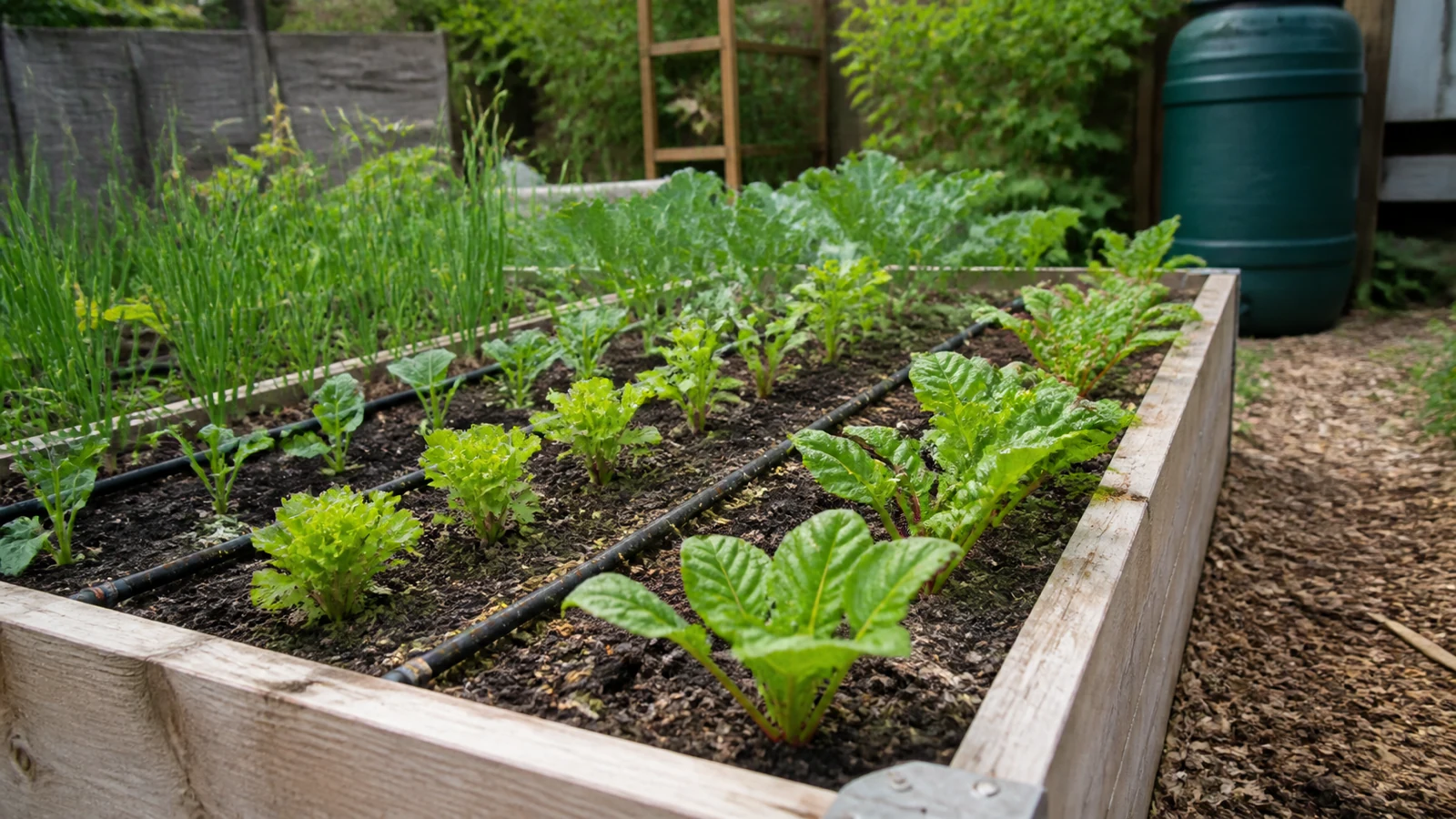
Raised Bed Drip Irrigation Kit UK: Layout Checklist Before You Buy
A raised bed drip irrigation kit is worth considering when your beds dry quickly, your crops need regular root-zone watering, or the plot is awkward to water by can. The right first step is not counting parts from a box; it is mapping the beds, water source, filtration and test routine so the kit matches the garden.
The RHS describes drip lines as tubing that delivers water slowly and directly to root zones. That suits raised beds because compost-rich beds can drain freely and lose moisture faster in sun and wind. The RHS also explains that plants need more water when warm or windy conditions speed transpiration, so your layout should be easy to adjust as the season changes.
Raised bed layout checklist
- Sketch every bed and mark crop rows before opening a kit.
- Decide whether each row needs inline dripline, individual stake drippers or a mix.
- Keep outlets close to the root zone, not aimed at paths or leaves.
- Fit or clean filtration when using rainwater from a butt.
- Stake tubing so it cannot move when soil is cultivated or birds pull at it.
- Run the system while you are present and check for dry corners and leaks.
- Add mulch only after confirming water reaches the intended soil area.
Bed length planning notes
| Raised bed setup | Planning note | Watch point |
|---|---|---|
| One compact bed near a butt | Gravity or a simple low-pressure layout may be enough | Uneven flow if the butt sits too low |
| Several beds in a row | Plan zones or valves so each bed can be checked separately | Long routes can make the far end under-watered |
| Allotment beds away from power | A solar pump can help if gravity is weak and no socket is available | Panel position and reservoir capacity need testing |
| Mixed crops | Put similar water needs together where possible | One schedule may not suit seedlings and large fruiting plants |
When solar pumping from a butt makes sense
The RHS says automated drip or trickle irrigation can save time and labour on bigger or more water-demanding areas such as fruit and veg plots. Solar pumping becomes a practical fit when the beds are off-grid, the water source is a butt or tank, and gravity alone does not move water reliably to the rows.
If your checklist points to off-mains pumping from stored water, review the SolarIrrig 10W solar irrigation kit as a candidate for domestic raised-bed layouts. If you have long multi-bed runs, commercial-scale beds or untested reservoir capacity, design the system first rather than buying a small kit and hoping it stretches.